Episode 30 · Deep tech · 67 min

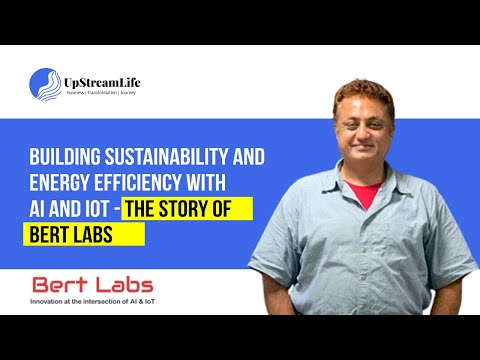
The factory's brain learns to breathe

Rohit Kochar built the sensors, the controller, the runtime and the reinforcement-learning brain from scratch, then let the stack actuate valves and chillers across 30-plus Indian plants. The receipts: a 52 per cent energy cut at one Mumbai campus, roughly ₹150 crore in six years, and a thesis that India must build products rather than only integrate them.

RK
Rohit Kochar
Founder & CEO, Bert Labs · with Vishal Krishna
The factory's brain learns to breathe: episode thumbnail
1:06:51
Said in this episode
▶ 10:33
52%
Energy saved at a Mumbai FMCG campus
Bert's airside-plus-waterside integration, deployed over an existing BMS and a 2018-vintage controls layer at a 1-million-sq-ft head office, cut energy use by 52%.
▶ 24:27
₹7cr → ₹4cr
The campus energy bill, before and after
The head office's ₹7 crore annual energy cost fell by ₹3 crore a year; Bert charges a SaaS fee plus a share of the savings it brings.
▶ 31:50
4,000+
IO points correlated every second
At a Gujarat caustic-chlorine plant, Bert's reinforcement learning reads and cross-correlates over 4,000 sensor points every single second, beyond any human operator's reach.
▶ 33:25
94–99.99%
Prediction accuracy across plants
Bert's models hit 99.99% prediction accuracy in a few cases, with the manufacturing range running from 94% upward, as Rohit states it.
▶ 1:05:54
30+
Plant deployments, 20+ more in pipeline
Five years of reinforcement-learning work now runs across automobile, pharma, chemical, specialty chemical, cement and FMCG plants plus commercial buildings.
▶ 46:33
₹150cr
Six-year revenue at 20%+ EBITDA
Bert closed around ₹150 crore in six years of operations at '20-plus' EBITDA, despite two pandemic years when factories barred visiting deployment teams.
The brief

The argument in sixty seconds

Most industrial AI stops at the dashboard. Bert Labs built everything between the chart and the valve: its own IoT sensors, an edge controller that speaks BACnet and OPC UA, a runtime that lands on any cloud, and a deep reinforcement-learning brain that reads 4,000-plus IO points every second and actuates the best combination of setpoints in real time. Rohit Kochar's proof is concrete: a 52 per cent energy cut at a million-square-foot Mumbai FMCG head office, a ₹7 crore power bill brought down to ₹4 crore, 30-plus deployments across pharma, cement, chemicals and automobile paint shops. Around the technology he wraps a larger argument: data infrastructure must precede physical plant, pricing should follow outcomes rather than headcount, and India's system-integration economy needs the audacity to build products from scratch. Six years in, Bert runs at roughly ₹150 crore with EBITDA above 20 per cent, profitable from day one by design.

Worth your time if you are

Deep-tech founders building hardware and AI from India
Manufacturing and sustainability CXOs planning Industry 4.0
Climate and energy-efficiency operators
Corporate leaders weighing a founder turn
Episode map

Where the conversation travels

Every block is a chapter, coloured by what it's about. Click any of it to jump straight to that minute on YouTube.

01Cold open: an AI company that makes money 0:00 Vishal introduces Rohit Kochar and Bert Labs, an AI-plus-IoT business transformation company that, unusually for the genre, generates cash rather than narrative, and reads the Finverse sponsor note. 02Standing on IT services' shoulders 1:55 Founded in 2017 to build a research-and-innovation company from India, Bert exists on a foundation Rohit insists graduates stop cursing: 25-30 years of IT services that put Indian software on the global map. 03The wedge: energy, Walmart, a 52% proof 4:32 Bert narrowed from energy to consumption to commercial-building HVAC; Walmart India's Krish Iyer pushed it from monitoring into control, and integrating the air and water sides cut 52% off a million-sq-ft Mumbai FMCG campus's energy use. 04Plug and play: inside the Bert stack 11:03 Bert MiniCon speaks BACnet, OPC and Profinet to whatever controllers a client already owns, Bert Nova runs on any cloud or edge, and multivariable AI replaces single-loop PID, a pitch aimed at the CFO, the CEO and the newly hired chief sustainability officer. 05Data infra before plant infra 20:05 A 40-year-old Chandigarh paper maker wanted Bert paused until its equipment overhaul; Rohit argued the learning survives, because parameters persist even when values change, so digital infrastructure should arrive ahead of the physical plant. 06The ₹7-crore bill and the paint shop 24:12 The 52% translated into money: a ₹7 crore annual energy bill cut by ₹3 crore, paid for via SaaS fees plus a savings share, followed by a walkthrough of the automobile paint shop, the biggest energy guzzler on a car line. 07Reinforcement learning on the factory floor 28:28 Deep RL, with its state space, rewards and penalties, picks the best combination across 4,000-plus IO points every second in plants so constrained that a 30-minute pharma deviation cancels an FDA licence, predicting at 94–99.99% accuracy. 08Selling ESG: India at 2, the West at 7 35:30 Western CEOs carry government carbon-neutral mandates for 2025–2030 while Indian execution stays slow; Rohit scores buyer seriousness 2 out of 10 in India against 7–8 in the US and Europe, which is why every sale starts at the very top. 09Institutions, not exits 39:06 Against the quick-idea-quick-exit generation, Rohit argues entrepreneurship is nation building: outside IT services and a Tata or Birla, India has few global institutions, and Bert's larger goal is turning mid-size manufacturers into world-beaters. 10Profit from day one, products from scratch 45:00 Every Bert project stands on its own feet, roughly ₹150 crore and 20-plus EBITDA in six years despite two pandemic years, and Rohit defied the Indian MDs of TI, Qualcomm and Analog Devices who told him not to build his own hardware. 11Banker to builder: pricing outcomes 51:36 From American Express to GE's captive to platform-priced services at Hayes, RR Donnelley, Macmillan and HOV, where output-based pricing ran 25–30% EBITDA against competitors' 13–17%. The constant was a problem-led rather than product-led approach. 12Books, mentors, and an ego in a trunk 56:49 Richard Sutton for AI, Jack Welch and Andy Grove for leadership, mentors as a blessing for Bert's 16 new IIT hires, and the closing creed: start as a nobody, bury the ego, and treat a crisis like COVID as the moment to pivot.
Timeline

The arc, briefly

Six years of building a control layer for other people's factories, as Rohit Kochar dates it.

2017Bert Labs starts, and Walmart asks for more than a dashboard. Rohit founds the company to prove a research-led product business can come out of India, and picks energy because it will matter to governments and industry in 2030 and 2050 as much as it does now. Krish Iyer's team at Walmart India gets involved the same year and tells him monitoring on its own will not go far. That work paused, partly because there were not enough Walmart stores in India to run it across.
2017-19Everyone tells him not to build his own hardware. For the first two years the Indian managing directors of Analog Devices, Texas Instruments and Qualcomm ask why he is making controllers when the market is full of them. His answer is that only the rigmarole of building from scratch buys the understanding that later lets you run models on the edge rather than merely infer on it.
2018The building everyone had already optimised. A global FMCG company's million-square-foot Mumbai head office ran a building management system plus an optimisation layer another technology firm brought to market this year. Bert went on top of both and took out 52 per cent of the energy, because it treated the air side and the water side as one system. A 7 crore rupee annual power bill fell by 3 crore.
2020-21COVID empties the commercial buildings. The product had been built for HVAC in offices, and offices went out of fashion. Two years of the pandemic cost Bert its deployments outright, because plants would not let visiting teams through the gate.
2021-22The pivot into manufacturing. Rather than wait, Rohit brought forward work that was always on the anvil and built the platform for cement, chemicals, pulp and paper, FMCG, pharma and automobile. Deep reinforcement learning now reads 4,000-plus IO points a second at a Gujarat caustic-chlorine plant and actuates against them.
2023Six years in, and profitable. Around 150 crore rupees of revenue at 20-plus EBITDA, 30-plus plant deployments with 20 or more to go, and prediction accuracy running from 94 per cent to 99.99. Every project is expected to stand on its own feet rather than be funded by another. Two of those six years were the pandemic ones.
2025-30The deadlines that make the sale. Western chief executives carry government mandates to be compliant by 2025 or 2030, and one global FMCG boss has been told to make the whole company carbon neutral by 2030. Rohit scores buyer seriousness in India at 2 out of 10 against 7 or 8 in the US and Europe, which is why every deal starts at the very top.
Takeaways

Ideas to carry out of this hour

01

Monitoring has a glass ceiling; control breaks it

Dashboard-and-alert solutions plateau at 5–10% energy savings because a human operator still has to act on the prediction. Walmart India's team under Krish Iyer told Bert in 2017 that monitoring alone wouldn't go far and pushed it to close the loop. That demand birthed Bert Optimus and Bert Gemini, real-time AI models that actuate controls rather than recommend actions.

02

Air side and water side were never two systems

Incumbent HVAC vendors sold separate solutions for the air side and the water side, yet occupancy and ambient temperature on the air side set the load the chillers must serve. Integrating both is why Bert cut 52% off a 1-million-sq-ft Mumbai FMCG head office that already ran a building-management system plus a 2018-vintage optimisation layer. In rupees: a ₹7 crore annual energy bill brought down by ₹3 crore.

03

Lay the data infrastructure before the plant

When a 40-year-old, ₹1,000-crore Chandigarh pulp-and-paper client wanted Bert paused until its European equipment was resized, Rohit refused the premise. A component swap doesn't change the demand-side ecosystem: parameters stay the same even if values differ, so the trained models keep their learning the way a brain doesn't reset when one input changes. Hence his standing advice to CXOs: digital-transformation infra ahead of physical plant infra.

04

Reinforcement learning thrives where rules collapse

PID and rule-based control are reactive and single-input-single-output, and no operator with 40 years on one line can correlate thousands of variables. Bert's deep RL reads 4,000-plus IO points every second at a Gujarat caustic-chlorine plant, infers unmeasurable 'soft sensors', and actuates the best combination in real time at 94–99.99% prediction accuracy. Nobody had risked unsupervised learning in plants where a 30-minute pharma deviation cancels an FDA licence, and Bert spent five years making it run at 30-plus sites.

05

The audacity to build from scratch is the moat

The Indian MDs of Analog Devices, Texas Instruments and Qualcomm spent Bert's first two years asking why it built its own controllers when plenty existed. Rohit's answer: only the rigmarole of building hardware and software from scratch earns the understanding on which ingenious work becomes possible, such as running AI models on the edge rather than only inferring from them. Skip that rigor and you remain a system-integration economy, which is exactly what he says India must outgrow.

06

Price the outcome, profit from day one

Rohit abhorred IT services' input-based pricing; at Hayes, RR Donnelley and Macmillan he sold platform-based services and ran 25–30% EBITDA against competitors' 13–17%, and HOV did $600M of revenue with 11,000 people where peers needed 25–30,000. Bert carries the same fundamentals, SaaS fees plus a share of verified savings and every project self-sustaining, closing around ₹150 crore with 20-plus EBITDA in six years, two of them lost to pandemic access bans.

07

Put your ego in a trunk at the bottom of the ocean

Accomplished professionals fail at starting up because the feeling of having done enough quietly slows their learning; Rohit's first rule in 2017 was 'I am a nobody', and his learnability quotient had to rise every year. The proof came when COVID emptied commercial buildings: rather than bleed, Bert used the crisis to build its manufacturing platform in 2021–22, and now runs 30-plus deployments with 20-plus more to go.

The numbers, drawn

What the episode measures

Every figure below was said on air, with timestamps included and caveats kept.

Where a Walmart store's energy goes

% of store energy use
Refrigeration · 33%HVAC · 33%Lighting · 33%
Refrigeration33%
HVAC33%
Lighting33%
Rough thirds as Rohit recalls from Bert's 2017 Walmart India discussions, each pegged at 'around 30-odd per cent', as stated in conversation.▶ 8:12

FMCG head office: annual energy bill

₹ crore per year
Before Bert7Annual saving3After Bert4
Figures as stated in conversation; Rohit separately cites 52% energy savings at the same campus, so treat the rupee split as rounded.▶ 24:27

The mid-size clients Bert wants to make world-beaters

₹ crore revenue (approx.)
Pulp & paper1,000Cement2,000Specialty chemicals4,000
Client revenue scales as cited in conversation; Rohit calls all three 'medium enterprises' that digital transformation should turn into global institutions.▶ 42:50

Everything between the chart and the valve

the stack Bert built itself, sensor to setpoint
Bert sensors IoT built in-house Bert MiniCon BACnet, OPC UA, Profinet Bert Nova runs on any cloud or edge Deep RL brain 4,000+ IO points a second Actuation valves, chillers, setpoints
Rohit's own walk down the stack. Dashboard-and-alert products stall around 5 to 10 per cent of energy because a person still has to act on the prediction; Walmart India's team pushed Bert to close the loop in 2017, and the bottom band is what came of it.▶ 11:03
Worth keeping

Lines that stay

Digital transformation infra needs to come ahead of your physical plant infra.

A human mind, in spite of 30, 40 years of expertise in one process line, can't fathom the correlations between these hundreds and thousands of variables.

This needs to change — where we have the audacity, and I'm using this word very responsibly, to build a product from scratch.

Put your ego in a trunk and have that trunk in the deepest end of the ocean. You're nobody.

Clips that travel

Short on time? Start here

Climate-tech founders

The Walmart push: from monitoring to control

A live wedge-finding case: monitoring's 5–10% ceiling, a customer demanding control, and the 52% proof that followed.

6:24 → 11:03 · 5 min ▶ Watch clip
Manufacturing CXOs planning capex

Data infra before plant infra: the paper-mill argument

Why an equipment overhaul doesn't junk your models: parameters persist, values change, so lay the data rails first.

19:36 → 24:12 · 5 min ▶ Watch clip
AI engineers eyeing industrial problems

Deep reinforcement learning, explained on the factory floor

State space, rewards, soft sensors, 4,000 IO points a second, 94–99.99% accuracy. RL in production, plainly told.

28:28 → 33:40 · 5 min ▶ Watch clip
Deep-tech founders

Build the controller anyway: the case for scratch

Rohit ignored TI, Qualcomm and Analog Devices MDs and built his own hardware, and the rigor that put AI models on the edge.

47:30 → 51:53 · 4 min ▶ Watch clip
Corporate executives turning founders

'I am a nobody': ego, learnability and the COVID pivot

Operating rules for starting at zero after a C-suite career, and the crisis pivot that built Bert's manufacturing line.

1:02:45 → 1:06:51 · 4 min ▶ Watch clip
Glossary

The jargon, unpacked

HVAC
Heating, ventilation and air-conditioning: the single biggest energy consumer in commercial buildings, and Bert's first target system.
Air side / water side
The two halves of an HVAC system: air handling that sets a building's load, and the chilled-water plant that serves it. Incumbents optimised them separately; Bert integrates both.
Deep reinforcement learning
AI that learns by acting and earning rewards or penalties against an objective, instead of training on labelled examples, which suits choosing control actions every second.
IO points
Input/output points: the sensors and actuators wired into a plant's control system; a rough index of process complexity (the Gujarat plant has 4,000-plus).
Soft sensor
A variable no physical instrument measures, inferred by models from measurable inputs, the correlations PID and rule-based control never captured.
BACnet / OPC UA / Profinet
Open industrial communication protocols that let controllers from different vendors talk to each other, the layer that makes Bert's plug-and-play integration possible.
Connections

If this resonated, go here next

Full transcript

The whole conversation, searchable

256 segments

Auto-generated captions, lightly cleaned. Click a timestamp to open that moment on YouTube.