Episode 174 · Enterprise · 43 min

Business Management Simplified

Tally turns forty this year, runs in eight out of ten Indian businesses, and has spent most of that time educating SMEs in getting their accounting right. Tejas Goenka walks through the cement dealer whose single invoice gets paid in four parts, why the cloud stopped being the cheap option, and what an AI feature has to prove before a small business will keep it.

TG
Tejas Goenka
Managing Director, Tally Solutions · with Vishal Krishna
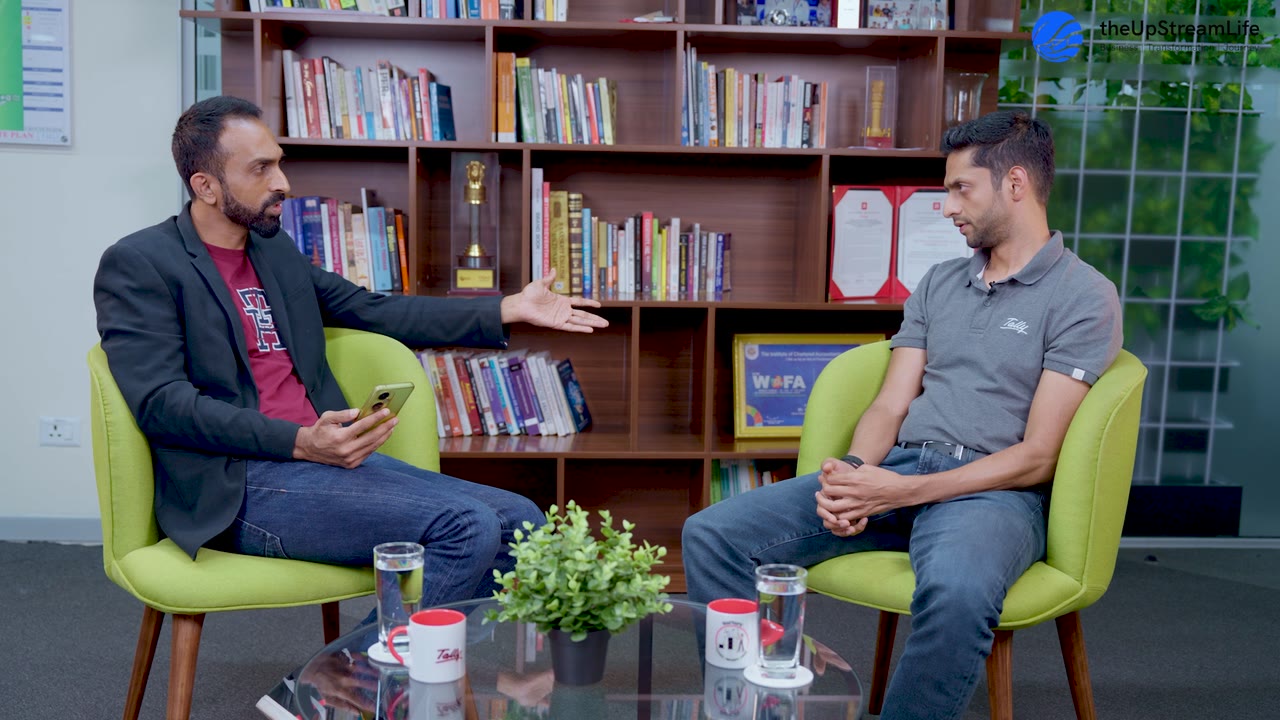
Tejas Goenka in conversation with Vishal Krishna
Not yet on YouTube 42:56
Said in this episode
1:13
40 years
Tally's age this year
Tejas's own framing rather than a milestone slide: four decades in a tech business while still being called legacy is not possible, so something must be going right.
4:09
18%
GST owed the moment you invoice
The liability lands when the invoice is raised, not when the money arrives. Invoice for ten or twenty or thirty lakhs and the tax is due regardless, so businesses have to decide when to invoice at all.
22:12
8 in 10
Indian businesses that run Tally
The reach figure he offers while explaining why founders reach out to him and why he answers. The lessons on building market-winning products come off a base that wide.
35:06
1 million
Registered learners on the certification track
Just crossed, and he calls it a drop in the ocean. Tally works through NGOs, governments and local training institutes, and rewrites the content every few months because it now goes stale.
36:35
~30 years
How long piracy was the problem
It shifted after GST. Compliance now arrives early in a business's life, nobody wants to run compliance on Excel, and 2017 through 2019 saw the move onto licensed copies.
The brief

The argument in sixty seconds

Tally is forty years old, sits in eight out of ten Indian businesses, and Tejas Goenka spends most of this hour explaining a single design choice: the software bends to the customer rather than the other way round. The proof text is a cement dealer in BTM Layout whose one invoice gets settled in four payments, and whose three invoices sometimes clear on one. Around that sit the constraints that make Indian SME software its own discipline. GST charges eighteen percent the moment you invoice, so invoicing becomes a cash-flow decision. Labour is cheap enough that customers expect a person to show up, which is why Tally runs service networks rather than a help centre. Tally holds no customer data at all, which keeps it out of the lending business it could otherwise dominate. And on AI, the position is unsentimental: a seventy-year-old in Calcutta asked about it before saying hello, but promise more than you deliver and a small business will drop you the same week. The closing thought is about a kid who built a robot goalkeeper by downloading a library, and the question Tejas wishes he had asked himself.

Worth your time if you are

Founders building software for Indian SMEs
Product people whose schema keeps meeting real life
Anyone shipping AI into an unforgiving customer base
Operators sizing up the MSME credit gap
Episode map

Where the conversation travels

Every block is a chapter, coloured by what it is about. Once the episode is up on YouTube, any of it will jump you straight to that minute.

01Forty years, and the word legacy 0:00 Vishal opens on the anniversary and the label that comes with it. Tejas takes the bait directly: four decades in a tech business while staying legacy is not a thing that happens, so something has been working. 02The cement dealer: one bill, four payments 1:56 A trader in BTM Layout who has sold cement and building material the same way for twenty years. One invoice settled in four parts, three invoices cleared by one bulk payment, two invoices taking six. The theoretical system has no row for any of it. 03GST starts a clock at the invoice 4:09 Raise an invoice and the eighteen percent is owed whether or not the customer has paid. So the question stops being whether to invoice and becomes when, which is a cash-flow decision the software has to respect. 04Why an Indian SME expects someone to show up 5:55 Tejas's father's example about the water bottle, and the cost logic underneath it. Outside India labour is expensive enough that everyone self-serves. India built the largest software sales and service networks instead. 05The operating system is a set of connections 8:33 GST network, banks, Bharat Connect. Once the ledger is wired into the ecosystem, data entry drops and the system starts answering questions. Tejas's father claims Tally 4.5 got there in 1995 with a calculator you could ask things. 06Calcutta, seventy years old, asking about AI 10:07 At a customer meet the first question, in Hindi, before any greeting, was about AI. It came from a man running a seventy-year-old auto parts business, which is why Tejas rejects the idea that Indian business owners are behind. 07What an AI feature has to earn 11:50 Three ways to get thrown out of a small business: promise AI and underdeliver, train on the customer's data, or price it high. Ingestion, asking for insight instead of reading a premade report, and eventually agents, all resting on trust, privacy and cost. 08The cloud stopped being the cheap answer 14:24 Capex to opex, then anytime-anywhere access, which Tejas still rates. What he will not accept is the pricing claim. At Tally's price points cloud is not cheaper, cost climbs with scale, and lock-in follows. 09Data blind, and the ten-day loan 17:29 Tally holds none of its customers' data, so banks cannot get it from Tally. The owner can share it, and the MSME credit gap is real enough that lenders build surrogate programmes while a borrower waits out the season they needed the money for. 10A tech company that makes accounting products 19:44 Own database, own maths, own memory management, own language. Customers never need to know that. Engineers do, and Tejas concedes Tally has not told that story well. 11DPIIT, far-off districts, and a startup challenge 21:31 Sessions run outside Bangalore, Delhi and Mumbai to teach founders how money actually moves, plus a concluded challenge to find manufacturing startups and put them in front of Tally's customers. 12Patna, UP, and the case for working harder 24:25 The tone he hears in smaller cities has changed. People want to stay and build rather than leave for a metro. At a friend's house in London the Indians were the only optimists in the room, and his read is that this decade is ours if we outwork it. 13Be curious, and keep the thinking 29:36 You cannot ignore AI any more than you could ignore the internet. Watson was supposed to end radiology and did not. The tool rewards people who know the domain well enough to ask it something worth asking. 14Tally 7.1, a million learners, and what GST did to piracy 32:36 The next release, document ingestion as Docs by Era, an MCP plan and conversational features. Then the skilling side, a million registered learners, and his father's line about piracy being a symptom of a product people want. 15Books, habits, and the kid who downloaded a library 37:43 A yoga textbook, a football coach's story, and a book from the finance team. Workouts five or six times a week for the sake of not being dependent later. Then the robot goalkeeper, and the question Tejas asked the kid who built it.
Timeline

The arc, briefly

From Tally 4.5 to the release shipping in a few days, the points in forty years that this conversation actually dates.

1995Tally 4.5 has a box you can ask questions. Tejas's father tells him he should have seen it: a calculator facility where you could ask anything and get an answer back. Tejas asks whether that means they had GPT in 1995, and gets a qualified yes. The story arrives as his answer to the current AI wave.
2000sThe cloud changes what it is selling. The first promise was CapEx to OpEx, because software demand was unpredictable and you always got the investment wrong. By the early to mid 2000s it had become anytime, anywhere access, which he says is still a solid promise. What went with it was privacy, and later the lock-in.
2007He enters college and the crash lands. Two years later the job market was great. Tough times come and good times come, which is his whole answer on whether to be optimistic about India now.
2010-12Tally training becomes a category. Vishal remembers SMEs of that period telling him they wanted Tally training, and institutes everywhere selling it. Nothing has changed on that count: two training institutes at the Bommanahalli signal, one on each side, and both teach Tally.
2017-19GST moves businesses onto licensed copies. Piracy had been the problem for about thirty years. GST changed two things: compliance now arrives early in a business's life, and nobody wants to run compliance on a spreadsheet. Those three years were the shift. His father's line was that great products get pirated, not the other way round.
2020-21New York, and the credit gap. Tejas spent the middle of COVID meeting American business owners, and came away arguing that the differences are a function of size and stage rather than geography. The same stretch made the MSME credit deficit plain: lenders build surrogate programmes off banking and GST data because they have little to go on, and a loan answer that takes six, eight or ten days arrives after the Diwali demand has gone.
2023-24The AI wave lands, and Tally does not rush. A seventy-year-old auto parts dealer opened a Calcutta customer meet by asking about AI before saying hello, which is why Tejas refuses the idea that Indian business owners are backward. The market he sells into is unforgiving: promise an AI solution that does not deliver, or say you might learn from their data, and you are thrown out.
2026Forty years in. Eight out of ten Indian businesses run Tally, the certification track has just crossed a million registered learners, and the company holds no customer data at all. 7.0 shipped in December, 7.1 is days away, and the AI brand, Era, is going live with document ingestion and conversational queries. He calls the million learners a drop in the ocean.
Takeaways

Ideas to carry out of this hour

01

Build for the exception, because the exception is the business

The cement dealer near the office in BTM Layout has run the same trade for twenty years. He sells to contractors, occasionally lands a large project, and gets paid in shapes no schema wants: one bill in four parts, three bills against one bulk payment, two bills across six. A system that insists on one invoice to one receipt is not wrong, it just describes somebody else. Tejas's line is that the mistake people like him make is walking in and telling that dealer he runs his business wrong. Sit in his context for two seconds and it is obvious who has to bend.

02

GST turned invoicing into a timing decision

The moment an invoice is raised, eighteen percent is owed, and it is owed whether or not the customer has paid. Invoice for ten lakhs, twenty, thirty, and the liability lands immediately while the money follows on its own schedule. So Indian businesses do not simply decide whether to invoice, they decide when, and they move dates around to survive the gap. A product that ignores that question is missing the thing its user spends the most attention on.

03

Indian SMEs expect enterprise service, and that is a cost story

Tejas quotes his father: a shopkeeper expects the water delivery to be carried into the shop, even for a single bottle, then buys the identical bottle himself on the way home. Same person, different expectation, because one is a business relationship and one is not. Outside India, labour costs make self-service the only affordable option, so SME software there evolved toward DIY. India went the other way and built the largest software sales and service networks, because customers want a name they can call. Same segment, different economics, different product.

04

The operating system claim is about connections, not features

Over roughly six or seven years Tally wired the ERP into the GST network, into banks, and into Bharat Connect. The value of those pipes is that manual data entry falls away and the ledger starts producing answers rather than storing records. Tejas is unhurried about the AI layer on top and says so. He also relays his father's needling on the subject: Tally 4.5 shipped a calculator you could ask questions of, which the two of them now joke was a sort of GPT in 1995.

05

An AI feature in a small business gets exactly one chance

Tejas lists the ways to be shown the door. Promise an AI solution that does not deliver on the promise, and you are out. Say you might use their data to learn, and you are out. Price it high, and you are out. What sits underneath is not scepticism about the technology. A seventy-year-old man running a seventy-year-old auto parts business in Calcutta opened a customer meeting by asking about AI before he asked anything else, in Hindi, without a greeting. The appetite is there. The tolerance is not, so the foundation has to be trustworthy, private and cost effective before any demo counts.

06

The cloud stopped being the cheap answer

The original pitch was capex to opex, because unpredictable software made you overinvest in hardware you would get wrong. Then it became access from anywhere, and Tejas still rates that promise highly. What he rejects is the pricing claim. At Tally's price points, cloud being cheaper is not correct, cost climbs as you scale, and lock-in tightens behind it. He reads the multi-cloud and hybrid movement of the last seven to ten years as the market quietly de-risking. So the answer Tally sells is private access on a machine you control that you can still reach from a phone in another state.

07

Data blind by design, which makes the credit gap harder to close

Asked whether banks can tap Tally's view of a business, Tejas answers that there is nothing to tap: Tally holds no customer data at all. The insight belongs to the owner, who already shares it when a bank asks for financials. The gap he describes is elsewhere. Lenders have too little understanding of MSMEs, so they build surrogate programmes off banking and GST data, and the borrower assembles documentation, sends it, and waits six days, eight days, ten days for an answer. By then the distributor scheme has closed and the Diwali demand has gone. The work now is letting a customer push parts of their own data straight to a lender.

08

Do not outsource the thinking to the tool

Two stories carry the closing argument. Watson was going to end radiology fifteen or twenty years ago because a machine could read a scan better than a person, and radiology seats in India stayed among the most expensive going. Then a college-bound kid told Tejas he had built a robot goalkeeper. Tejas asked the good questions, about tracking the ball and about the light. The kid said he downloaded a library and it worked. Tejas's question back was why he did not want to make the library better. Building has never been easier, which is exactly why the scarce thing is now an insight worth building on, plus the grit to see it through.

Drawn out

Four things that need a picture

Only what was said on air. This is an hour about design choices more than metrics, so these are four diagrams rather than six charts.

What gets you thrown out

three ways to lose a small business, in the order Tejas gives them
01The AI does not do the thing you promised it would doOut
02Their data might be used to train your modelOut
03It is expensiveOut
Which is why the floor comes before the demo TrustworthyPrivateCost effective
Tejas calls the environment unforgiving rather than backward. No matter what you demo, he says, without the basics people will not be appreciative.11:50

How one trade actually clears

invoices raised, against payments received
1 bill
3 bills
2 bills
The three patterns Tejas gives for the same cement dealer. Squares are invoices raised, circles are payments received. A system that assumes one invoice to one receipt has no row for any of these.3:03

The same man, twice in one day

one bottle of water, and two different expectations
In the shop On the way home He expects the bottle carried in, even one He buys the identical bottle himself Outside India labour costs make self-service the only affordable option, so SME software went DIY In India the largest software sales and service networks
Tejas quoting his father. One of the two is a business relationship and one is not, which is why Tally runs service networks rather than a help centre. Same segment, different economics, different product.6:22

Six days, eight days, ten days

one MSME loan, and what expires while it is decided
What the borrower does assembles docs sends it waits 6, 8, 10 days By the time the answer lands the scheme has closed Diwali demand has gone Lenders run surrogate programmes off banking and GST data, because they cannot read an MSME.
The gap Tejas describes sits with the lender, not the borrower. Tally holds no data to hand over anyway, so the work he names is letting a customer push parts of their own file straight to a lender.19:19
Worth keeping

Lines that stay

Forty years in a tech business, and remaining legacy is simply not possible. So there's something that must be going right for us.

Asking him to change will prevent you from succeeding in a market like India.

First, we don't have any data. We are totally data blind.

Put yourself in understanding the subject, and then use the tool that AI provides, as opposed to outsourcing the thinking to the tool.

Great products get pirated, not the other way around.

Quoting his father 36:35

I just downloaded a library, and the goalkeeper works. My question was, why are you not wanting to make the library better?

On a kid heading to college 41:20
Clips that travel

Short on time? Start here

Product people building for India

One bill, four payments

The cement dealer in BTM Layout, the shapes his payments actually arrive in, and why telling him to change is how you lose the market.

1:56 → 4:09 · 2 min Watch clip
Founders selling into Indian SMEs

The eighteen percent clock

Why GST made invoicing a cash-flow decision, and what that does to a business that is waiting to be paid.

4:09 → 5:20 · 1 min Watch clip
Anyone shipping an AI feature

What an SME will throw you out for

The Calcutta customer meet, the three fast ways to lose a small business, and the floor a feature has to clear first.

10:07 → 12:10 · 2 min Watch clip
CTOs redoing the infrastructure maths

The cloud is not the cheap option

Capex to opex, then access from anywhere, then the part of the pitch Tejas thinks stopped being true.

15:54 → 17:29 · 2 min Watch clip
Fintech and lending operators

Data blind, and the ten-day wait

Tally holds no customer data, lenders build surrogates instead, and the season the borrower needed the money for closes while the file sits.

17:29 → 19:44 · 2 min Watch clip
Glossary

The jargon, unpacked

ERP
Enterprise resource planning: the system a business runs its ledgers, stock and compliance on. Tejas uses it interchangeably with what most Indian users still call their accounting software.
GST / GSTN
India's goods and services tax and the network that carries its filings. Tally connected customers' ERP to the GSTN some years ago, and GST is also what pushed businesses off pirated copies.
Bharat Connect
The interoperable bill payment rail Tally has wired into, so a business can settle and receive payments from inside the same system that raised the invoice.
MSME
Micro, small and medium enterprises: the segment Tejas describes as carrying a genuine credit deficit, since lenders have little data with which to understand it.
Surrogate programme
A lending product that scores a borrower on proxies such as banking or GST history, used when a lender cannot assess the business directly.
DPIIT
The Department for Promotion of Industry and Internal Trade, Tally's partner on the district-level founder sessions and on the concluded manufacturing startup challenge.
Capex to opex
Buying software as a one-time asset versus renting it as a running cost. The original argument for the cloud, and the one Tejas says has since been overtaken.
MCP
Model Context Protocol, the interface that lets an AI assistant reach into a system and act on it. Tejas names an MCP plan alongside conversational features in what is coming.
Connections

If this resonated, go here next

Full transcript

The whole conversation, searchable

578 segments
VK Vishal KrishnaTG Tejas Goenka

Transcribed from the studio master with speaker diarisation, lightly cleaned. Click any timestamp once the episode is on YouTube to open that moment.