1989Plastic arrives, on the host's account. Vishal says he saw no plastics in Bangalore until then. After that it was in the villages and everywhere else, with nobody quite sure how to dispose of it, so households keep it at home in the one large bag that holds all the other bags.
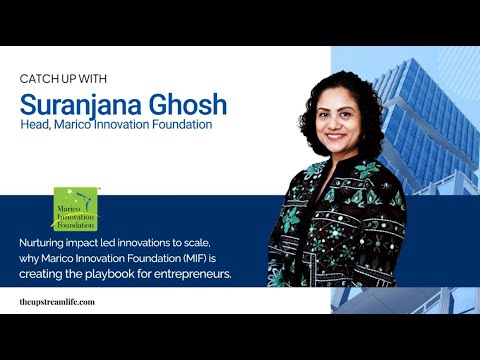
2003Harsh Mariwala starts the foundation. It began as the philanthropic arm of Marico Limited, before CSR existed as a concept in Indian law, and at a point when innovation was still used interchangeably with jugaad and invention.
2005-10Jugaad and frugal engineering become the words. Vishal was happy with the second and never with the first. Suranjana's distinction is that jugaad is opportunistic, handy and short-lived, while innovation has to survive permutations, combinations and any round of questioning.
2006The Innovation for India Awards launch. One of the first of their kind in the country: an eight-month evaluation with two independent juries and on-ground diligence, cutting 500 to 700 entries down to six or seven winners across for-profit and not-for-profit categories. Sixty-five-plus innovations recognised over nine editions.
2016Scale Up starts, ten years after the awards. Companies enter at ₹70 lakh to ₹1 crore of annual revenue and are handheld toward ₹100 crore over three to five years, one business challenge at a time, each taking six to nine months. No equity, no capital, all of it pro bono.
2019The mould they could not stay in. She splits the story into pre-Covid and post-Covid, and says a foundation working at the cutting edge could not have carried on in its 2019 shape. What followed included an Innovate to Beat Covid challenge that funded Indian-made ventilators, PPE and masks at global standards, one of which found an export market.
2021-22The plastics playbook gets written. Worked on across both years with the Indian Institute of Science and a consulting firm, then launched in January, because everything already published described the problem and almost nothing described the fix. It profiles 15 startups, from AI sorting at high speed to recycling multi-layer packaging and seed-based packaging you can eat. Abolishing plastic is not a solution when it is in your spectacles and your shirt buttons.
2023Thirty innovations in, two across the line. Seven years of Scale Up have produced 30-plus supported innovations and two companies past ₹100 crore, S4S Technologies and Atomberg. The team scouts 100 to 150 startups a month and onboards about one, holding to a definition that requires the nearest competitor to be roughly two years behind. Her database held about 2,200 Indian startups in 2013; there are now more than 90,000 and a little over 100 unicorns.
2025The tenth edition. Nine rounds of the awards are done and the tenth is being prepared for 2025, with the year ahead pointed at plastics, clean tech and agritech.