Episode 57 · Enterprise · 25 min

Own the building, refuse the lock-in

Almost every flex operator leases a floor and then needs a lock-in to recover the fit-out. Novel Office inverted both: it buys or develops the 1.2 million square feet it rents out, has never taken bank debt or venture money, and will build a lakh of square feet to a client's drawing with no commitment. The trick is in the interiors: a false floor at ₹175 to 200 a square foot, movable glass instead of gypsum, and a layout engineered to be broken into four.

MN
Manoj Nair
President, Novel Office · with Vishal Krishna
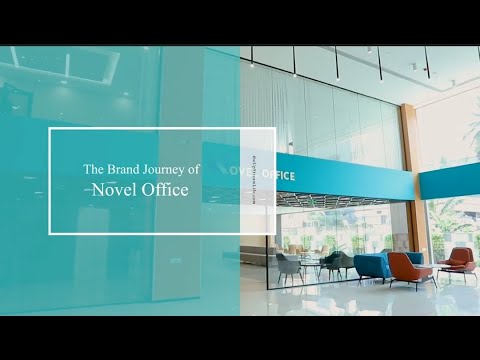
Own the building, refuse the lock-in · episode thumbnail
25:29
Said in this episode
▶ 0:00
1.2M sq ft
Space Novel Office owns and operates
Stated in the opening read-in, across five centres in Bengaluru and five in the US, and all of it is bought or developed, none of it leased.
▶ 9:09
₹175–200
Extra interior cost per sq ft for false flooring
The premium Novel pays to run electrical, data and network under a raised floor, so a layout can be rewired rather than rebuilt when a tenant changes or leaves.
▶ 9:43
25–30%
Air-conditioning cost premium for flexibility
VRV systems with re-routable ducting instead of chillers and air-handling units. They are dearer to install, but the ducts move when the walls do.
▶ 17:58
~2%
Share of inventory kept as co-working
Budgeted to earn nothing and held mainly for search visibility. The example he gives, 150 seats out of 5,000, is nearer 3%, so treat the exact figure loosely.
▶ 12:27
95–97%
Pre-COVID occupancy across properties
Deliberately short of full: seats are held back so growing clients can expand in place. The most recently launched property was still around 40% at the time of recording.
▶ 15:42
28 months
Plan approval to occupancy certificate
For the newest 3.5 lakh sq ft building, a G+5 with two basements and 18 metres of excavation, right through COVID; Nair reckons about 20 months without the pandemic.
The brief

The argument in sixty seconds

Nair's claim is that the flex-workspace industry is built on the wrong balance sheet. Most operators lease a floor, fit it out, and then need a lock-in to recover that fit-out, which is why 'lock-in' became a bad word the moment COVID arrived. Novel Office does the opposite: it buys or develops the buildings it fills, has taken no construction finance, no lease-rental discounting, no venture capital and no private equity, and so, in Nair's phrase, had no gun of rent on its head when the market froze. Owning capped its growth against operators spending outside money, and he says plainly that Novel is the oldest in the market and not the biggest, but it bought the freedom to sign a one-lakh-square-foot built-to-suit with no commitment, because the interiors are engineered to be undone. False flooring at ₹175 to 200 a square foot, VRV air conditioning 25 to 30% costlier than ducted chillers, and movable glass partitions let a departing tenant's layout be split four ways at almost no cost. On top of that sits an opex layer of desktops, servers and network, then accounting, payroll, HR and recruitment on an à-la-carte menu, aimed at founders who know equity is the costliest money there is to sink into a depreciating laptop. And co-working, the word the whole category markets on? Roughly two percent of inventory, budgeted to earn nothing, kept because Google's ad auction demands the keyword. The future Nair is actually selling is the customised serviced office, the thing corporates, Microsoft included, now take because nobody wants to manage their own washrooms.

Worth your time if you are

Founders weighing a lock-in against a deposit
Operators running leased flex space on thin spreads
Bootstrapped businesses trading growth for no debt
CFOs deciding whether office IT should be capex at all
Developers wondering if they should also be the landlord
Episode map

Where the conversation travels

Every block is a chapter, coloured by what it's about. Click any of it to jump straight to that minute on YouTube.

01Cold open: 1.2 million square feet 0:00 The read-in sets the shape of the business: 1.2 million square feet, offices from 100 to 10,000 square feet, 10 to 300 seats, no lock-in and no deposit, five centres in Bengaluru and five in the US. Then Vishal introduces the president of a company he calls the industry's best-kept secret. 02There is no secret sauce, only a treadmill 1:19 Nair waves away the 'best-kept secret' framing: the business is a treadmill where standing still means going backwards, and a decade-plus in India has been a run of small innovations rather than one trick. 03Flex went from unsellable to inevitable 2:18 Fourteen years ago the pitch needed convincing, because clients wanted exactly 2,000 square feet and nothing else, while today even Microsoft takes flex space, and the only remaining holdouts are enterprises with two decades of visibility. 04No construction finance, no gun of rent 4:17 COVID hit the whole of real estate and Novel was not insulated, but unlike other operators it sits in property it owns and carries no construction finance, no lease-rental discounting, no bank borrowing, no venture capital and no private equity. 05Evangelising a category the brokers missed 5:52 When Novel started, even the big international property consultants were neither aware of nor comfortable with flex space, so the work was persuasion, and owning rather than leasing meant Novel stayed the oldest operator without becoming the largest. 06A lakh of square feet, no lock-in 7:40 Anyone can customise an office; the differentiator, Nair argues, is customising one lakh square feet built-to-suit and then telling the client not to sign a lock-in, a word that has turned toxic since COVID. 07False floors, VRV and movable glass 8:55 Three deliberately expensive interior choices, raised flooring at ₹175 to 200 a square foot carrying all services beneath, re-routable VRV air conditioning 25 to 30% costlier than chillers, and almost no gypsum, mean a departing tenant's layout can be split four ways for the next customers. 08Turning the client's capex into opex 10:58 Beyond space, Novel supplies the whole infrastructure stack of desktops, laptops, servers, routers and switches on an opex model, then layers accounting, payroll, HR and recruitment as an à-la-carte menu, on the argument that equity is too costly to spend on hardware that depreciates. 09Why 100% occupancy is a mistake 12:27 Novel ran at 95 to 97% before COVID and deliberately holds seats back so a client taking 20 today can grow into 40 in the same building. Ninety per cent plus is the comfortable band, and the newest property is still filling. 10Dallas 1993, Bengaluru 2007 13:28 The company was founded in the US in 1993 by a Dallas-based serial entrepreneur of Indian origin from an IT-outsourcing background; the India model came out of a plain problem, a 5,000-square-foot floor with no 5,000-square-foot tenant, and grew property by property to a ground-up 3.5 lakh square foot build delivered in 28 months. 11Co-working is an AdWords keyword 16:12 More co-working happens in Starbucks and Coffee Day than in co-working companies, Nair says; beyond two or three people it fails on confidentiality and churn, so Novel keeps about two percent of inventory as co-working, budgets it to earn nothing, and treats it as the price of ranking on the search everyone types. 12Call it a customised serviced office 18:54 Asked about the future of work, Nair renames the category: dedicated, customisable serviced offices with conference rooms, cafeterias and IT shared by choice, and the economics follow, because 100 tenants in one building need 25 to 30 facilities staff rather than 100. 13Corporates, SMEs and the clean washroom 20:58 A clean washroom wins no productivity but a dirty one loses it, so corporates that could self-manage are handing facilities to operators with electricians, technicians, plumbers and carpenters on the payroll, the same staff a ten-seat startup gets to share. 14Dallas deal, Whitefield dig, half a million feet 22:53 A $12 to 15 million Dallas acquisition is under discussion, Whitefield's excavation has started for about 1.5 lakh square feet by October 2023, three more Bengaluru acquisitions are being chased toward half a million square feet added by March 2024, and Novel now claims to be both flex operator and developer.
Timeline

The arc, briefly

One floor nobody would take, grown into 1.2 million square feet that Novel owns outright.

1993Novel starts in Dallas. Mali Subbaiah, a US citizen of Indian origin and a serial entrepreneur out of IT solutions and outsourcing, founds it in the States.
2007A floor with no tenant turns into a business model. Subbaiah came into India holding Bengaluru property he could not let, and Nair crossed paths with him. A 5,000 square foot floor needs a tenant who wants exactly 5,000 square feet, and the man who wants 3,000 cannot be served, so they learned to split it. The first property filled inside six to nine months, which bought the confidence to buy a second, then a third and a fourth. Clients then wanted exactly 2,000 square feet and nothing else, and even the CBREs and JLLs were neither aware of flex space nor comfortable with it.
2020COVID arrives and there is no gun of rent. The whole of real estate took the shock and Novel was not insulated, but it sits in buildings it owns, with no construction finance, no lease rental discounting, no bank borrowing, no venture money and no private equity. Lock-in turned toxic in the same months, because an operator who leases a floor and fits it out needs one to get the fit-out back. The newest property, three and a half lakh square feet, G plus five, two basements, eighteen metres of excavation, went from plan approval to occupancy certificate in 28 months straight through the pandemic. Nair reckons 20 without it.
Today1.2 million square feet and about 840 clients. Five centres in Bengaluru and five in the US, offices from 100 to 10,000 square feet. Occupancy ran 95 to 97 percent before COVID and is held deliberately short of full, so a client taking twenty seats can grow into forty without leaving the building. Co-working is about two percent of inventory, budgeted to earn nothing, and kept because it is the word people type into Google. More co-working happens in Starbucks and Coffee Day than in co-working companies.
Oct 2023Whitefield comes out of the ground. Plan approval is in and excavation has started, for about one and a half lakh square feet, bought and built rather than leased.
Mar 2024Half a million square feet more. Three further Bengaluru acquisitions are being chased, and Nair expects at least that much added to inventory by the close of the financial year, with a Dallas property of 12 to 15 million dollars in discussion at the same time. Novel now calls itself a developer as well as a flex operator.
Takeaways

Ideas to carry out of this hour

01

Owning the asset is what pays for the no-lock-in offer

Every flex operator sells flexibility; most of them still take commitments, because they are sitting in leased premises and have to recover a fit-out before the landlord's rent eats them. Novel either buys the building or develops it ground-up, which removes the rent clock entirely and lets Nair customise one lakh square feet to a client's specification while telling him not to sign a lock-in. The catch he admits: capital constrained by ownership meant Novel stayed the oldest operator in the market without becoming the biggest.

02

Debt-free is a strategy with a price tag, not a virtue signal

No construction finance, no lease-rental discounting, no bank borrowing, no venture capital, no private equity. Nair frames the last two as capital that arrives with someone wanting results on their timetable, not his. The payoff came when COVID froze the sector: Novel took the same shock as everyone else but, as he puts it, had no gun of rent on its head. The cost is visible in the growth curve, and he says so without hedging.

03

Build the fit-out so it can be taken apart

Novel spends more on interiors on purpose. Raised flooring adds ₹175 to 200 per square foot but carries electrical, data and network under the slab so a breakout area becomes a cabin by pulling cables through; VRV air conditioning costs 25 to 30% more than chillers and air-handling units but its ducting moves; gypsum is replaced almost entirely by movable glass partitions. The return is the ability to break one departing tenant's layout into four and re-let it at negligible cost, which is what makes a no-lock-in promise survivable.

04

Co-working is a keyword, not a business

Nair is blunt that co-working stops working past two or three people. Confidentiality goes, and the churn is high enough that he calls it impossible to manage. Yet every operator brands itself co-working, because otherwise Google's ad auction will not surface them for the search customers actually type. Novel therefore carries roughly two percent of its seats as co-working, budgets that inventory to produce no revenue at all, and treats it like the space you surrender to a reception or a server room.

05

Never fill the building to 100%

Pre-COVID occupancy ran at 95 to 97% and Nair says he does not want more. Held-back inventory is the promise that lets a client take 20 seats now instead of 40 on speculation, knowing the extra seats will be there in the same property when they grow. It is a retention mechanism disguised as vacancy, and it means 90%-plus is treated as the comfortable operating band rather than a shortfall.

06

The costliest money a startup has should not buy a laptop

Novel offers the full infrastructure layer of desktops, laptops, servers, routers, switches and network as an opex line, making the customer's office setup effectively zero capex. The pitch is aimed squarely at funded startups: equity is the most expensive form of funding there is, and spending it on hardware that depreciates is, in Nair's word, foolish. Above that sit accounting, payroll, HR and recruitment as an à-la-carte menu that not every tenant orders from.

07

The future of work is a serviced office, not a shared desk

Nair's answer to the future-of-work question is a renaming: customisable serviced offices, dedicated to one company, with conference rooms, cafeteria and IT shared only where the tenant chooses to share. Startups stay because managing an office is not core; SMEs are already migrating; and corporates that could self-manage are moving too, because facilities are a hygiene factor: a clean washroom gains nothing, a dirty one costs productivity. Pooling 100 tenants into one building turns 100 housekeeping and maintenance headcounts into 25 to 30 running 24x7.

The numbers, drawn

What the episode measures

Every figure below was said on air, with timestamps included and caveats kept.

Occupancy, and why it never reaches 100

% of seats filled
Pre-COVID, all sites96Mature buildings now95Newest, just launched40
As stated on air: 95 to 97% before COVID, 95%-plus in the mature buildings today, about 40% in the recently launched property. The blended portfolio figure he gives next is garbled in the auto-captions and is not plotted.▶ 12:27

The footprint, and what is being dug

lakh sq ft
Portfolio today12Newest, delivered3.5Whitefield, Oct 20231.5Added by March 20245
Figures as stated in conversation: 1.2 million sq ft in hand (12 lakh), a 3.5 lakh sq ft newest building, roughly 1.5 lakh sq ft under excavation at Whitefield, and at least half a million sq ft to be added by the financial year ending March 2024, with three more Bengaluru acquisitions being chased.▶ 24:07

Why the others need a lock-in

the rent clock, and what removing it allows
The leased operator leases the floor, pays rent from day one spends on the fit-out, has to recover it so the tenant is asked for a lock-in Novel, which buys or builds no rent clock, so no lock-in asked The cost: oldest in the market, not the biggest.
Nair's explanation of the offer. Owning or developing the building removes the rent clock, which is what lets him customise a lakh of square feet to a client's drawing and then tell that client not to sign a commitment.▶ 7:21

Three interiors built to come apart

what Novel pays extra for, and what it buys
Three choices that cost more Raised flooring + ₹175 to 200 a sq ft Power, data and network run under the slab. VRV air conditioning + 25 to 30% The ducting moves when the walls move. Movable glass, almost no gypsum Partitions shift instead of being rebuilt. One departing layout re-lets as four.
The fit-out is dearer on purpose, and it is what makes the no-lock-in promise survivable: a layout can be broken into four and re-let at negligible cost. Nair openly invites competitors to copy all three.▶ 9:09
Worth keeping

Lines that stay

We're completely self-funded, and that has been a huge, huge benefit for us — because we didn't have a gun of rent on our head.

The word lock-in has become a bad word in the market. Nobody wants to lock in. Earlier people wanted flexibility; now, after COVID, nobody wants to commit.

Today there is more co-working happening in Starbucks and Coffee Days than in co-working companies.

Unless you call yourself a co-working player, Google uncle doesn't allow you to come up on the AdWords search.

If the washroom is clean you're not going to get higher productivity from employees — but if the washroom is not clean, you're going to lose productivity.

Clips that travel

Short on time? Start here

Bootstrapped businesses trading growth for no debt

No debt, no VC, no gun of rent

The capital-structure confession at the heart of the episode: why owning the building and refusing every form of outside money was what made COVID survivable.

4:17 → 5:52 · 2 min ▶ Watch clip
Operators running leased flex space on thin spreads

The interiors that come apart

Nair walks through the three fit-out choices, raised floor, VRV and movable glass, that let one departing tenant's layout become four, and openly invites competitors to copy them.

8:12 → 10:58 · 3 min ▶ Watch clip
Anyone running a capacity business on utilisation

Why 100% occupancy is a mistake

Held-back inventory as a retention tool: take 20 seats now, not 40, and the extra seats will be waiting in the same building.

12:14 → 13:28 · 1 min ▶ Watch clip
Developers wondering if they should also be the landlord

A floor with no tenant, and the model that followed

The origin story: a 5,000 sq ft floor nobody would take whole, the decision to split it, and the compounding that ended in a 28-month ground-up build.

13:43 → 16:12 · 2 min ▶ Watch clip
Founders weighing a lock-in against a deposit

Co-working is an AdWords keyword

The most quotable stretch: Starbucks as the real co-working market, why it breaks past three people, and the 2% of inventory kept purely so Google will list you.

16:15 → 18:54 · 3 min ▶ Watch clip
Glossary

The jargon, unpacked

Flex space
Office space taken on short, flexible terms instead of a multi-year lease. It is the category Novel spent its first years persuading Indian tenants and brokers to accept.
Lock-in
The minimum period a tenant must commit to before it can exit; Novel's differentiator is a fully customised fit-out with none, and Nair says the word itself has turned toxic post-COVID.
Lease rental discounting (LRD)
A loan a property owner raises against the future rent stream of a leased building, one of the several debt instruments Nair says Novel has never used.
False flooring
A raised floor with a void beneath for electrical, data and network cabling; it adds ₹175 to 200 per square foot but lets services be re-routed when a layout changes.
VRV air conditioning
Variable refrigerant volume systems whose ducting can be moved as partitions move, unlike centralised chillers and air-handling units; roughly 25 to 30% costlier to install.
Occupancy certificate (OC)
The municipal clearance that a finished building may legally be occupied, and Novel got one 28 months after plan approval on its newest 3.5 lakh sq ft property.
Serviced office
A dedicated, fully managed office where the operator provides the fit-out, facilities staff and services, with meeting rooms and cafeteria shared by choice, and Nair's preferred name for what the market calls co-working.
IPC
International property consultant, the large global brokerages that, Nair says, were neither aware of nor comfortable with flexible office space when Novel began.
Connections

If this resonated, go here next

Full transcript

The whole conversation, searchable

101 segments

Auto-generated captions, lightly cleaned. Click a timestamp to open that moment on YouTube.