The matching problem nobody owns: capital meets founders.
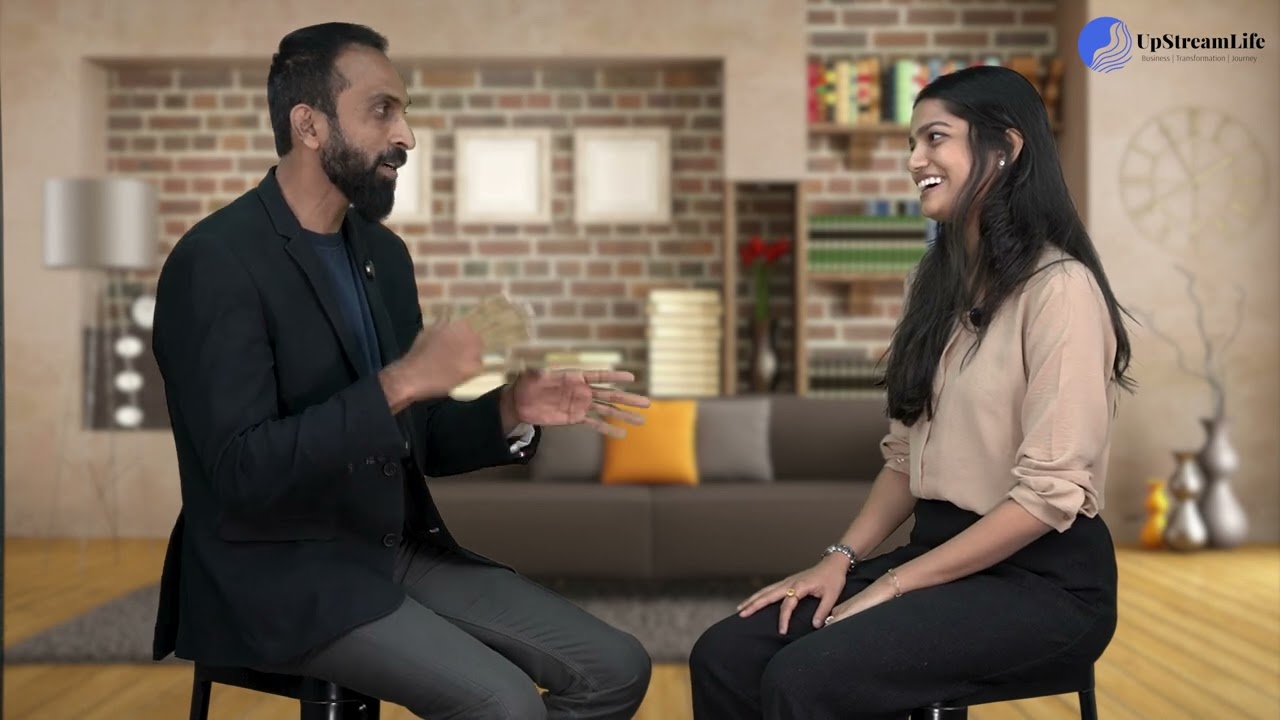
India has more venture capital than at any point in its history and more founders raising than its discovery infrastructure can serve. A founder knows fifty funds. There are roughly fifteen hundred. Priyanka, who built Mohur to sit between the two, argues the gap is not a marketing problem or a network problem. It is a data problem dressed up as a relationship problem. This conversation is about what an actual matching layer for Indian venture looks like, and why nobody has built one before.
In sixty seconds.
Indian venture has scaled. The number of active funds has grown roughly five times since 2018, from a few hundred to somewhere near fifteen hundred. The founder's mental model has not. Most founders can name the same twenty or thirty firms; the long tail is invisible to them, and a fund deep in that tail is invisible to its right founder.
Priyanka's thesis is that the missing layer is not another directory, another newsletter, or another LinkedIn list. It is a structured matching surface: fund theses as queryable data rather than blog posts, founders as filterable profiles rather than warm-intro queues. Mohur is built to be that surface.
The deeper claim is that warm intros are not a feature of the market; they are a symptom of its discovery failure. When matching is hard, social capital becomes the ranking signal, and a market ranked by social capital systematically misallocates the capital it is meant to allocate.
Where to land in the conversation.
Each chapter opens the YouTube video at that timestamp in a new tab.
Indian venture's last fifteen years, briefly.
The structural events behind the matching problem Mohur is built to solve.
Five ideas to carry into your own work.
Mental models lifted from the conversation that travel beyond venture. Each one is the kind of thing you can quote in a strategy meeting on Tuesday.
Matching is two-sided trust, not search.
The founder-fund market is not a database problem and not a discovery problem. It is a problem of two parties each needing to believe the other is the right one before they spend the time. A directory tells you who exists. A match tells you who is likely to say yes, and gets credibility on both sides for staying out of the bad ones.
Directory plus intro > directory alone.
AngelList listed funds. Tracxn lists everything. Neither closes the loop. A useful matching layer has to do two things a directory cannot: qualify the match against the fund's actual recent activity, and then transmit it through a channel both sides will read. The intro is the unit, not the listing.
The thesis as a queryable schema.
Every fund publishes a "thesis page": sector, stage, cheque size, geography, conviction lines. Almost none of it is structured. Priyanka's bet is that thesis pages become the schema the venture industry never gave itself, so a founder can ask "who writes a two-crore cheque at pre-seed in industrial-tech, ex-metro, in the last six months?" and get an answer.
Ecosystem as network effect, not branding.
The word "ecosystem" gets used by accelerators and policy decks to mean "a lot of stuff happening." Priyanka uses it more strictly: overlapping participants where each new fund, founder, or LP makes every other one more useful. Mohur's defensibility is not the directory; it is the second-order graph that builds up as theses, founders, rounds, and outcomes accumulate.
The long tail is the unaddressed market.
The top twenty funds are oversubscribed for founder attention. The bottom thousand are starved of it, and they are the ones with cheque sizes and stage focus that match most of the founders who actually need capital. The platform opportunity is not at the head; it is in surfacing the long tail to the people who would prefer it if they knew it existed.
Fifteen things to actually walk away with.
Each one carries the timestamps where the moment lives, and a transferable note for work that isn't venture.
A founder knows fifty funds. India has near fifteen hundred.
The arithmetic that the rest of the episode hangs on. In 2018 there were roughly three hundred active venture funds investing in India. By 2026, the working number is somewhere between thirteen hundred and fifteen hundred, depending on whether you count rolling funds, AngelList syndicates, dedicated micro VCs, family-office vehicles, and corporate venture arms as funds. Most founders, when asked to list the firms they would pitch, name the same twenty or thirty: Sequoia (now Peak XV), Accel, Lightspeed, Nexus, Matrix, Blume, Stellaris, Kalaari, Elevation, 3one4. The 1450 they have never heard of are the ones most likely to be a fit.
The asymmetry runs both ways. The fund deep in the tail is similarly invisible to the founder who would be its ideal cheque. Both sides pay the cost of an inefficient market every quarter.
Founders don't get rejected. They pitch the wrong fund.
The most reframing line in the conversation. The story a rejected founder tells themselves is "the investor didn't see it" or "the market is bad" or "we weren't a fit." Priyanka's argument is that almost all of that is downstream of a more boring problem: the founder pitched a fund whose cheque size, stage, sector, or current portfolio constraints meant the meeting was never going to convert. The signal looks like rejection. It is mostly misallocation.
The corollary matters: the founder is then convinced their pitch is broken and starts rewriting the deck, when the fix was upstream: pitch a fund that writes their cheque, at their stage, in their sector, in their market. The deck didn't need editing. The list did.
Funds have a top-of-funnel problem too.
The one-sided framing of "founders chasing funds" misses how exhausted the other side is. A small fund gets two to three hundred inbound decks a month. A senior partner can run roughly forty real first meetings in a quarter. The match rate between inbound and what the partner actually wants to see is, by every working estimate, under five percent. Most fund time is spent filtering noise, not picking from a relevant set.
This is the other half of Priyanka's pitch. Mohur is a fund tool as much as a founder tool. A fund that gets a curated, thesis-matched flow with the noise filtered out saves the most expensive resource a fund has (partner hours) and improves its hit rate without adding headcount.
A thesis is not a blog post. It is a schema.
Every fund publishes its thesis somewhere: a page on the website, a Medium post, a Substack, an LP deck excerpt. Almost none of it is in a form a machine can read. "We invest in transformational founders building category-defining companies at the intersection of AI and Bharat" is real text, written by a real partner, that contains zero filter values. Cheque size? Unstated. Stage? Implied. Geography? Loose.
Priyanka's bet is that the venture industry is one schema definition away from a different working surface. If thesis pages become structured (sector taxonomy, stage band, cheque range, geography, portfolio composition, recency) they become queryable. The founder gets a filter; the fund gets a comparable. Both sides win the half-hour they used to lose to "is this even a fit?"
The warm-intro economy has a long tail nobody serves.
The conversation is careful here. Priyanka does not argue warm intros are bad. She argues they are the symptom of poor discovery, and they ration capital by who you know rather than what you build. A founder with a strong network gets the first ten meetings for free. A founder in Coimbatore building industrial software for textile mills gets none of them. The capital is the same; the on-ramp is not.
The long tail of funds, the ninety percent of firms outside the top hundred, actively want founders they would not otherwise see. A platform that can route a Coimbatore industrial-software founder to a Chennai-based micro VC writing two-crore cheques in deep tech is doing work the warm-intro graph cannot.
The cost of a bad match is paid by both sides.
The founder loses a month of cycle time, walks out of three meetings with feedback they can't use, and now has a partner at a name-brand fund who has formed a "passed on it" view that will travel through the gossip layer. The fund loses three partner hours and ends up further from a strong deal. Multiply by the volume of mismatched meetings in any given quarter (Priyanka's working estimate is that a majority of first meetings are structurally mismatched) and the aggregate cost is enormous.
The point isn't that bad matches happen. It's that the industry treats them as cost of doing business, when most of them are upstream-solvable.
India invented stages: Pre-A, Bridge, the dead zone.
The textbook stages (seed, Series A, Series B) were drawn by Silicon Valley capital in conditions India has never matched. Series A in India is, in practice, a much wider band than in the US. So the market invented stages: Pre-A (the round between a real seed and a real A), Bridge (the round you do when the A you thought you'd raise didn't materialise on time), Series A1, A2 (the round you do because the milestones for a clean B aren't there yet).
These aren't quirky labels. They are the lived shape of Indian fundraising. A platform that pretends US stages are the standard categorisation is mis-routing every founder it touches.
Rolling funds and micro VCs change the supply curve.
Three structural shifts in the LP and GP layer since 2018: AngelList syndicates becoming serious, rolling funds as a one-person-can-be-a-fund mechanism, and the explosion of dedicated micro VCs (sub-fifty-crore funds, often vertical, often ex-operator). Combined, they have added several hundred new cheque-writers to the Indian market. None of them have brand recall outside their own network.
This is precisely where the discovery gap is sharpest. A founder who needs a one-crore cheque does not need Peak XV; they need a micro VC whose entire fund thesis is one-crore cheques in their sector. That fund exists. The founder cannot find it.
The LP base is modernising. The capital is finally local.
For most of the 2010s, Indian venture was funded by US LPs through US-domiciled vehicles. That has shifted. SIDBI's Fund of Funds for Startups, DPIIT-backed instruments, NIIF, the rise of Indian family offices writing into AIFs, and the slow professionalisation of HNI capital have changed the LP page. A meaningful fraction of new Indian funds in 2026 raised primarily from Indian LPs.
The implication for matching is real. A fund whose LP base is Indian family offices has different return time horizons, different sector preferences, and different geographic mandates than a US-LP fund. A platform that ignores LP-side composition gets the recommendation wrong even when the surface metrics match.
Data platforms and matching platforms are different products.
Tracxn, Inc42, VCCEdge, PitchBook for the international view: these are reference data. They tell you who exists, what they did, when. They are sold to analysts and corp-dev teams, priced accordingly, and not built for a founder running a raise. A matching platform is a different shape: lighter on the historical archive, heavier on current-state thesis data, intro infrastructure, and feedback loops that improve the next match.
Priyanka is careful to draw the distinction. Mohur is not trying to be the canonical reference for Indian venture; it is trying to be the routing layer for an active raise. The data platforms can keep doing what they do, and arguably are a feeder of structured inputs into the matching layer rather than competitors of it.
The 2022 winter was a market signal, not a market end.
The 2022-2023 funding pullback in India was the loudest correction since the 2016 ad-tech and consumer-internet shake-out. Dry powder did not vanish; deployment did. Funds raised in 2021 sat on commitments and slowed their pace. The number of new deals fell; the number of bridge rounds rose. Founders who had not raised in time were taught a vocabulary they hadn't needed before: extension, down round, structured secondary.
What survived is more interesting than what didn't. The funds that came out of the winter with intact reputations were the ones that had been honest about their thesis going in. The platforms, including matching platforms, that came out stronger were the ones whose product fit a slower market.
Accelerators are pre-matching. Mohur is post-graduation.
Y Combinator, Sequoia Spark (now Peak XV's Surge), Antler, 100X.VC, AngelList's accelerator track: each is, in part, a matching mechanism. A founder who goes through a strong accelerator has had a chunk of their network problem solved. The investors curated on the demo day know the founder is pre-vetted; the founder gets warm exposure to a tight set of relevant firms.
The unsolved population is everyone who didn't go through one. Most Indian founders haven't. The matching layer Priyanka is building is the platform version of the accelerator's intro graph, for the much larger group of founders who built without a programme behind them.
DPI is the only metric that ages well.
A short digression that matters. TVPI looks great in years one through four. IRR is paper. DPI (distributions to paid-in) is the only number that reflects whether capital actually came back. Most Indian funds raised between 2018 and 2021 are now five to seven years in. Their DPI is the conversation now.
For a matching platform this is operational, not philosophical. The funds that will deploy aggressively in 2026 are the ones whose 2018 vintage is starting to return capital. The ones still sitting on TVPI marks and no DPI are reluctant. Without that LP-cycle awareness, recommendations route founders to funds that look active and aren't.
Beyond the metros: Tier 2 founders and the discovery gap.
The most under-told story in Indian venture. There are working founders in Indore, Coimbatore, Jaipur, Bhubaneswar, Surat, Madurai, building deep-tech, manufacturing software, agri infrastructure, vernacular consumer products. They are not on the Bangalore-Delhi-Bombay conference circuit. They do not have Twitter audiences. They are systematically invisible to the funds whose entire deal flow comes through that circuit.
Priyanka frames this as the most asymmetrical part of the matching problem. A platform that surfaces a Coimbatore textile-software founder to a Chennai micro VC is closing a discovery gap no other channel can. This is also where Mohur's strongest defensibility lives. The long tail of founders is its own moat once it is indexed.
The platform's defensibility is the second-order graph.
Anyone can scrape a fund's website. Anyone can build a directory. The first version of Mohur, or any platform like it, is a listing with filters. The interesting part is what accumulates after that. Which intros converted to meetings. Which meetings converted to second meetings. Which sectors are over-pitched relative to deployable capital. Which funds say their thesis is X and actually deploy in Y. That second-order graph is not scrape-able.
The defensibility, in other words, is exactly the same as the defensibility of any matching marketplace at any point in its history. The directory is the cost of entry; the outcome graph is the moat.
What the episode measures.
Every figure below was said on air. Timestamps open the video at the moment it lands.
The map a founder carries, against the market
The other side of the funnel
The rungs India had to add
A thesis page, and the same thesis as a schema
Lines worth keeping near your desk.
The jargon, unpacked.
Some of these will be obvious; some won't. Skim, mark the unfamiliar, come back later.
Three angles on Monday morning.
If you don't work in Indian venture, here's what to take.
If you're a founder raising
- Audit your list before your deck. Most rejection is misallocation. The fix is the target list, not the slides.
- Filter funds by cheque size, stage, sector, geography, and recency of deployment before you write your first email.
- The long tail (micro VCs, rolling funds, sector-specific firms) is where the cheques that match you actually live.
- If a fund's last three deployments are in sectors unlike yours, the meeting is not converting. Save the quarter.
- Treat warm intros as a complement, not a requirement. The platforms that route by structure will catch up to the network ones, fast.
If you run a fund
- Your top-of-funnel signal-to-noise is worse than you tell your LPs. Filtered, thesis-matched inbound is partner-hours back.
- Publish your thesis in structured form. Sector taxonomy, stage band, cheque range, geography, last-six-months portfolio composition.
- The long-tail founder you can't see today is probably the highest-conversion source you'll have once the matching layer routes them.
- DPI is the conversation now. Talk about it openly with founders. It changes the deployment expectations they have of you.
- Bridge and Pre-A are real stages. If your thesis doesn't address them, you are mismatched against most of the inbound you receive.
If you're an ecosystem operator
- Index the new supply faster than legacy channels. New funds, new cheque-writers, new theses. The delta is the value.
- Tier 2 founders are the most under-routed cohort. Programmes, events, and tooling that surface them have outsized leverage.
- Sponsor structured thesis collection. The industry will not standardise on its own.
- The accelerator is the cohort matching surface; the matching platform is the surface for everyone outside it. Both exist for a reason. Design for the gap between them.
- Track outcomes, not vanity metrics. Meeting-to-cheque conversion by sector is the only number that means anything in this category.
The whole conversation, searchable.
Click a timestamp to open YouTube at that moment. Click any line to highlight it (yellow). Highlights and notes save in this browser only.
00:00 in the page to seek.SEGMENTS when ready. Until then, the chapter map and timestamp jumps in each takeaway will still open the video at the corresponding moment on YouTube. Auto-captions occasionally mis-hear proper nouns; treat the future transcript as a working record, not a verbatim one.